Taking a Rental Car from Armenia to Georgia
24 September 2026
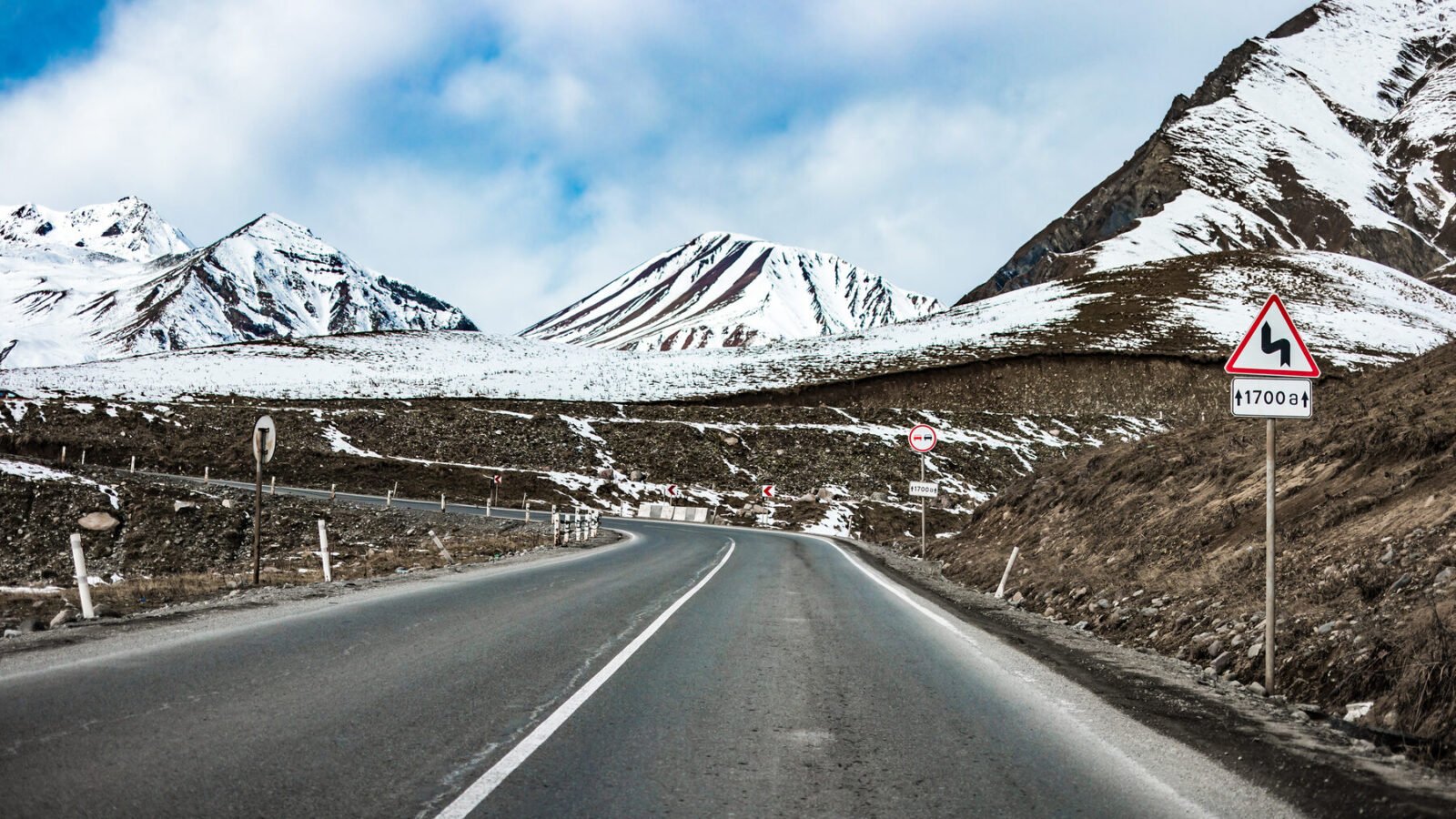
You can take an Armenian rental car into Georgia, but only with the company’s written permission and a notarised power of attorney that the company issues for you. Expect a cross-border fee of 15,000 to 28,000 AMD, plus 30 GEL for compulsory Georgian insurance at the border. And ignore anyone who tells you to bring a Green Card — neither Armenia nor Georgia belongs to that system.
On this page
The Green Card myth
Start here, because it is the most commonly repeated error on this subject and at least one Armenian rental company publishes it on its own website.
Neither Armenia nor Georgia is a member of the Green Card international motor insurance system. The Council of Bureaux lists both only as eligible for future membership. A Green Card is therefore neither valid nor required for either country. The UK’s RAC states the same thing plainly for Armenia.
What you actually do is buy the local compulsory third-party policy in each country: APPA in Armenia, which your rental already carries, and Georgian TPL at or before the Georgian border. If a rental company or a travel blog tells you to arrange a Green Card, it is working from out-of-date or simply wrong information, and you should treat the rest of its border advice with the same caution.
Permission and the power of attorney
Since 1 June 2018, Georgia has required a notarised authorisation from the registered owner whenever the driver of a foreign-registered car is not the owner named on the registration document. A rental car always triggers this. Armenia’s embassy in Tbilisi issued a public advisory about it in July 2018 after Armenian drivers started being turned back at the border.
Practically, this means three things.
The rental company issues the document, not you. It is the registered owner, so it executes the power of attorney in your name at an Armenian notary. You cannot arrange this yourself and you cannot do it at the border.
It has to be in Georgian or English. An Armenian or Russian original needs a notarised translation attached.
You have to ask in advance. Every Armenian company that permits crossing requires prior notice, and the penalty for not asking is severe: one operator’s published terms forfeit the entire 100,000 AMD deposit if you cross without notifying them. Beyond the money, crossing without written permission voids your insurance for the whole trip.
Policies differ sharply. Some Armenian operators sell cross-border permission as a straightforward add-on. At least one international chain operating in Armenia prohibits cross-border rental outright. One aggregator sells a “Georgia travel permission” that is not available on every car in its fleet. If Georgia is part of your plan, make it a filter when you choose the company, not a question you ask at pickup.
What it costs
| Item | Cost |
|---|---|
| Cross-border fee, Armenian operator | 15,000–28,000 AMD for the rental period |
| Notarised power of attorney, if billed separately | 15,000–30,000 AMD (usually bundled into the fee above) |
| Georgian compulsory TPL, passenger car, 15 days | 30 GEL — statutory rate |
| Georgian TPL, 30 days | 50 GEL |
| Penalty for driving in Georgia without TPL | 100–200 GEL, usually checked on exit |
Budget roughly 25,000–35,000 AMD plus 30 GEL all in — call it €80–95 — for a normal week’s trip to Tbilisi and back. That is the real number, against quotes on other sites ranging from $35 to $80 to “prohibited”.
Georgian insurance at the border
Georgia’s compulsory third-party cover for foreign-registered vehicles is set by law, with a published statutory tariff. Use these figures, not blog estimates — at least one widely-read site publishes rates nearly double the legal ones.
| Duration | Passenger car up to 3.5 t |
|---|---|
| 15 days | 30 GEL |
| 30 days | 50 GEL |
| 90 days | 90 GEL |
| 1 year | 295 GEL |
Three mechanics matter. Fifteen days is the minimum policy, so a three-day trip still costs 30 GEL. It is valid in Georgia only. And there are no refunds — if you buy the wrong period you cannot cancel it.
Cover is 30,000 GEL per victim for life and health, 300,000 per incident, and 25,000 GEL per injured party for property. Like APPA in Armenia, it protects other people, not your car. Your Armenian CDW does not follow you across the border unless your contract explicitly says so — check that, because most do not.
Buy it online at tpl.ge before you arrive and skip a queue, or at kiosks immediately past the border. One note for Russian travellers: Russian bank cards will not work for the online purchase.
Which crossing to use
Four road crossings are officially designated; three carry international traffic, and together they handle about 80 per cent of Armenia’s trade.
Bagratashen – Sadakhlo: use this one
Open 24 hours, the main crossing, and the obvious choice for Yerevan to Tbilisi. The two posts sit about 500 metres apart across a bridge over the Debed, which forms the border in the canyon. Tbilisi is 65 to 70 kilometres away, an hour to ninety minutes. Yerevan is about 200 kilometres south. Plan five to six hours Yerevan to Tbilisi including the border.
Waits: 20 to 40 minutes on a weekday morning, 30 minutes to two hours generally, and 1.5 to 3 hours on a peak summer weekend. Winter is the fastest, often 20 to 30 minutes. Avoid 07:00–10:00 and weekend afternoons.
The approach is now excellent. The M6 from Vanadzor through Alaverdi to Bagratashen — 90 kilometres — was fully rebuilt, with the final stage completed in 2023: twelve bridges and overpasses, three tunnels rehabilitated, lighting installed. It also runs through the Debed canyon past Haghpat and Sanahin, which makes it the scenic option as well as the fast one. Fuel is available within 500 metres on both sides.
Bavra – Ninotsminda: only if you are going to Akhaltsikhe
This is the high one. Bavra sits at 2,150 metres, Ninotsminda at 1,940, across the open, treeless Javakheti plateau. It is lightly trafficked and quick — travellers consistently describe it as one of the easiest borders they have crossed — and it is the right choice if you are going from Gyumri to Akhaltsikhe, Vardzia, the Javakheti lakes or Borjomi.
Snow and ice are normal on the Javakheti plateau from late autumn into early spring, and it is cold and windy even in summer. Between roughly November and March, use Bagratashen instead — or at minimum cross in daylight on proper winter tyres. This is also not a sensible route for Yerevan to Tbilisi in any season.
Gogavan – Guguti: the overflow
Small, quick, and useful when Bagratashen is saturated — Armenian border guards have publicly suggested it in exactly that situation. The catch is on the Georgian side, where the final 13 kilometres is an unpaved track through beech forest. Fine in dry weather in a decent car, unpleasant otherwise.
The fourth crossing, Privolnoye – Akhkerpi, is officially designated but there is no evidence it handles third-country traffic. Do not plan around it.
Entry rules, and the new 2026 insurance requirement
Georgia’s visa-free list runs to 94 countries whose citizens may enter and stay for one full year — all EU states, the UK, the US, Canada, Switzerland, Norway, Japan, Australia, New Zealand and Russia among them. EU citizens may enter on a national ID card rather than a passport. There is no codified six-month passport validity rule, though six months is sensible.
Georgia now requires tourists to hold health and accident insurance with a minimum limit of GEL 30,000, covering the whole stay, in Georgian or English, on paper or as a PDF. Reported as Government Decree No. 602. This is separate from and additional to the vehicle insurance — driving over from Armenia, you need both. Border police may ask for it.
On the customs side, a foreign-registered light vehicle may stay in Georgia for 90 days. Overstaying costs 50 GEL a day up to a 1,000 GEL cap, payable in cash at the border on exit. No carnet is needed. None of this affects a normal one- or two-week rental, but it is worth knowing if your plans change.
Coming back into Armenia is simple: visa-free stays of up to 180 days in a year for EU, UK, US and Russian citizens alike. That is a more generous rule than Schengen’s 90-in-180, and a genuine advantage for anyone planning a long regional trip.
The other direction
Renting in Tbilisi and driving to Armenia is possible but harder, and worth understanding if you are comparing the two.
Most Georgian companies refuse outright. Those that permit it need a notarised power of attorney naming Armenia specifically, costing somewhere between 150 and 300 GEL, with a lead time of about two weeks. The cross-border fee runs €80–100, or USD 80 at one chain. Georgian CDW does not extend into Armenia. You buy Armenian APPA at kiosks roughly 100 metres past the Armenian checkpoint, around $8 for a week. One-way drop-off in the other country is generally not permitted. All in, expect $160 to $200 on top of the rental.
Renting on the Armenian side and driving north is simply less administrative work.
The Armenian land borders with Turkey and Azerbaijan are closed. The Margara crossing to Turkey was declared operationally ready in August 2026, but no opening date has been announced. Iran is open — the only road crossing is Agarak to Norduz, about 376 kilometres south of Yerevan past Meghri — but no Armenian rental agreement permits it, it requires a Carnet de Passage, and US, UK and Canadian nationals cannot travel independently in Iran. Georgia is the only realistic international drive from Armenia.
Planning Armenia and Georgia together?
Tell us your dates before you book and we will confirm in writing what the crossing needs and what it costs.
Questions people actually ask
Can I take a rental car from Armenia to Georgia?
Yes, with the rental company’s written permission and a notarised power of attorney that the company issues. Arrange it when you book, not at pickup. Some companies prohibit it entirely, so check before you choose the supplier.
Do I need a Green Card for Armenia or Georgia?
No. Neither country is part of the Green Card system, so a Green Card is neither valid nor required. You buy each country’s own compulsory third-party policy: APPA in Armenia, TPL in Georgia.
How long does the Bagratashen border crossing take?
Typically 20 to 40 minutes on a weekday morning and 30 minutes to two hours in general. Peak summer weekends can run 1.5 to 3 hours. Winter is usually fastest. Avoid 07:00 to 10:00 and weekend afternoons.
How much is car insurance at the Georgian border?
30 GEL for a passenger car for 15 days, which is the statutory rate and the minimum policy. 50 GEL for 30 days. Buy it online at tpl.ge before arriving or at kiosks past the border. It is not refundable.
Which crossing is best between Armenia and Georgia?
Bagratashen–Sadakhlo for almost everyone: 24 hours, the best facilities, and a fully rebuilt approach road. Bavra–Ninotsminda only if you are heading for Akhaltsikhe, Vardzia or Borjomi, and not in winter — it sits at 2,150 metres on an exposed plateau.
Can I drop the car off in Tbilisi?
Not with an ordinary cross-border permission, which covers taking the car out and bringing it back. One-way Armenia-to-Georgia drop-off is a separate arrangement that only some companies offer. Ask before booking if that is your plan.
Last verified 20 September 2026. Georgian TPL tariffs from the statutory table published at tpl.ge under the Georgian law on compulsory liability insurance for foreign-registered vehicles. Green Card membership from the Council of Bureaux. Georgian visa-free entitlement from Government Ordinance No. 255, most recently amended 24 February 2026. The 2026 travel-insurance requirement is reported consistently by multiple sources; we have not read the decree text directly. Cross-border fees are from published Armenian operator terms and vary by company.