Winter Driving in Armenia: Tyres, Passes and What Closes
24 September 2026
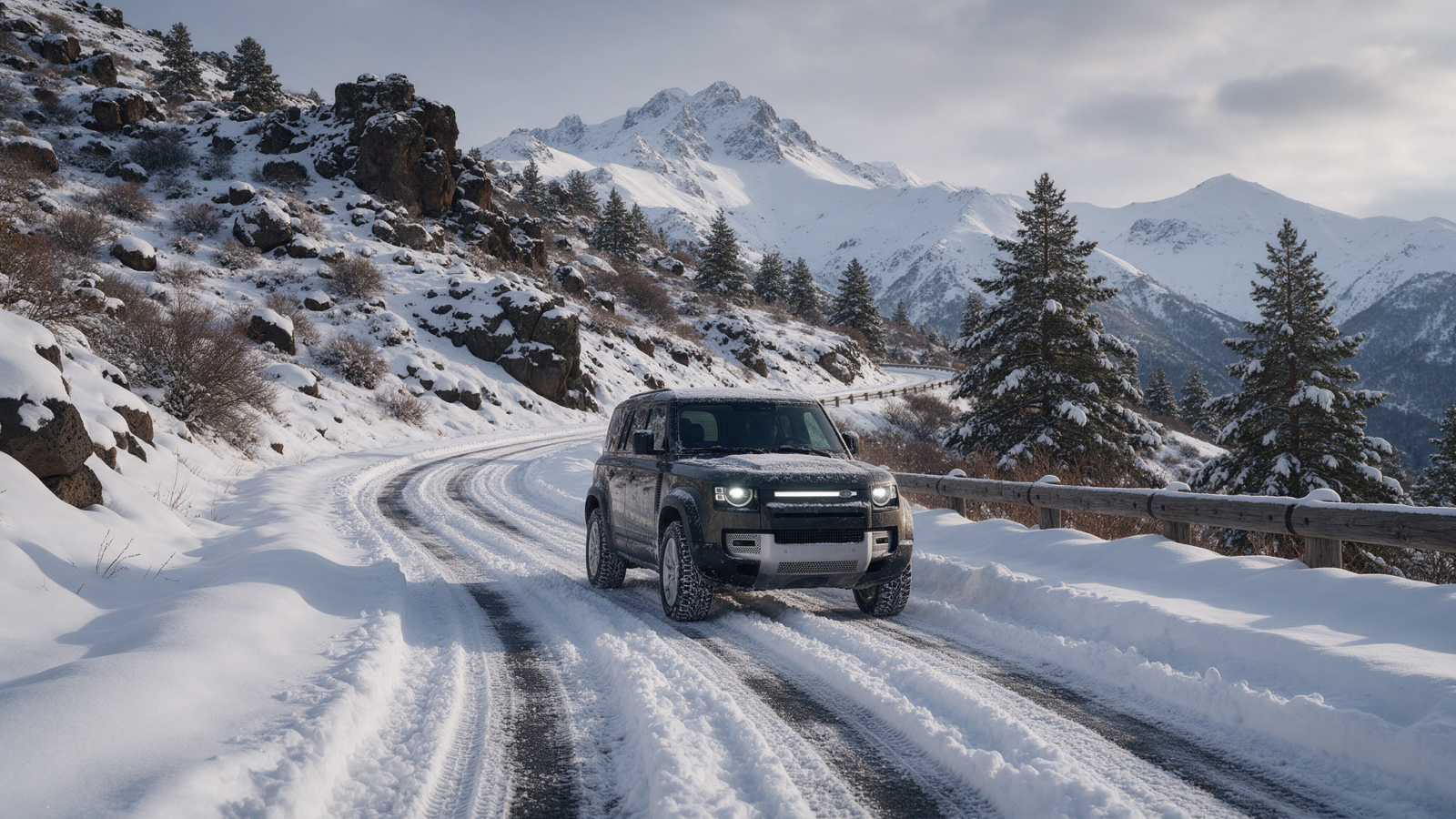
Winter tyres are legally mandatory in Armenia from 15 November to 31 March, on every car and van up to 3.5 tonnes, with tread above 4 millimetres. Almost no foreign travel site mentions this — not the German motoring club, not the Austrian one, not the big English-language blogs. If you are renting here between mid-November and April, checking the tyres is the single most useful thing you can do at pickup.
The rule, and where it comes from
Armenia introduced a mandatory winter tyre period by government decision on 28 November 2024. It came into force on 10 December 2024 and the Ministry of Internal Affairs restated it publicly in October 2025 ahead of the following season.
The winter tyre rule
- Period15 November – 31 March
- Applies toCars and goods vehicles up to 3.5 t
- Minimum treadMust exceed 4 mm
- In force since10 December 2024
One nuance worth knowing. The original November 2024 announcement framed the requirement as applying when driving on iced or snow-covered roads, while the October 2025 notice reads as a flat calendar rule. The safe interpretation, and the one any competent rental fleet follows, is to fit winter tyres for the whole window regardless of what the weather is doing in Yerevan on the day.
The Ministry’s notice does not publish a fine amount, so we will not invent one. The bigger exposure is not the fine. It is that driving a non-compliant vehicle is a breach of traffic law, and breaching traffic law voids rental insurance cover in most Armenian contracts. A crash on summer tyres in December is a crash you pay for entirely.
Look at the sidewall for the alpine symbol — a three-peak mountain with a snowflake, often alongside M+S. Check all four, including the spare if you can. Winter tyres with 3 mm of tread are legal in Germany and illegal in Armenia, where the threshold is above 4 mm, so glance at the tread depth too. If anything looks wrong, say so before you leave the forecourt.
What closes, and when
Armenia does not shut down in winter. Yerevan, the Ararat plain and the main M-roads keep running. What changes is the high ground, and the pattern is predictable enough to plan around.
| Road | Winter status |
|---|---|
| Kari Lake and Amberd, Mount Aragats | Fully closed from late November to mid-May. Not a judgement call — the road is under snow |
| Selim (Vardenyats) Pass, 2,410 m | Usually restricted for articulated trucks and flagged “difficult to pass” for others. Fully closes in severe weather |
| Vorotan Pass, 2,344 m (M2 to Goris) | Open in principle year-round, but can become impassable at any time after heavy snowfall |
| Vanadzor – Dilijan | Regularly restricted for trailer trucks |
| Spitak – Gyumri and the “Spitak curves” | Regularly restricted; black ice common |
| Tatev – Shinuhayr – Goris, Noravan – Ltsen – Tatev | Regularly restricted for trailer trucks |
| Berd – Chambarak, Gandzakar – Itsakar | Close completely in winter |
On the Selim Pass specifically, the common claim that it “closes in winter” is imprecise, and being imprecise about it costs people trips. The daily bulletins usually show it restricted for trailer trucks and difficult for other vehicles, not absolutely shut. In good conditions with proper tyres, a careful driver gets over it in January. In a storm, nobody does.
Black ice is reported routinely in Gegharkunik, around Aparan and Aragats, at Spitak, Tumanyan, Tashir, Abovyan, Hrazdan, Vayk, Sisian, Goris, Ashotsk, Amasia and Vanadzor. Several of those are on the main tourist corridors, not obscure back roads.
The Armenian Rescue Service publishes a road status bulletin, updated daily through the winter, listing exactly which passes are closed, restricted or difficult. Check it on the morning you travel, not the night before. It is the most useful winter driving resource in the country and hardly anybody outside Armenia knows it exists.
Driving it
The mountain roads here are well engineered but unforgiving of momentum. A few things genuinely help.
Start early and arrive before dark. Winter days are short, rural roads are unlit, and every Western foreign ministry advises against driving outside towns at night here. In December, plan to be off the passes by four in the afternoon.
Treat the passes as having no services. There is nothing on the Selim Pass — no fuel, no café, no shelter. The same goes for the Vorotan stretch and the Aragats road. Fill up in the last real town: Yeghegnadzor before Selim, Vanadzor before the Debed canyon, Goris before anything south.
Assume you will lose phone signal. Coverage drops on passes and in the gorges around Dilijan, Goris and Vayots Dzor, and on the eastern shore of Lake Sevan. Download offline maps before you leave Yerevan. Viva-MTS has the best rural reach of the three Armenian networks if you are buying a local SIM.
Carry the boring things. A blanket, water, a phone power bank, a torch, and enough fuel that a two-hour wait behind a stuck lorry is an inconvenience rather than a problem. Armenian vehicles are expected to carry a fire extinguisher — the Austrian motoring club lists it as mandatory equipment here — so check the car has one.
Watch for rockfall signs. The German foreign office singles these out in its Armenia advice, and it is right to. Freeze-thaw cycles bring material down in the Debed canyon and the Azat gorge, and the Tatev bypass has sections without rockfall netting.
On snow chains we have found no Armenian legal requirement, prohibition or seasonal mandate, so we are not going to tell you the law says something we cannot verify. Compliant winter tyres are the requirement; chains are a personal choice for a specific pass on a specific day.
Is a winter road trip worth it?
For the right itinerary, yes — and the country is close to empty. Armenian tourist demand in February runs at roughly a third of September’s, while average rental rates barely move. You get the same roads with nobody on them.
What works in winter: Khor Virap in snow with Ararat behind it, which is the country’s signature winter image and worth the drive on its own. Garni and Geghard, both close to Yerevan on a good road. Lake Sevan, bleak and enormous and better in winter than most people expect. Gyumri, which suits the season. Dilijan and the Debed canyon monasteries, with care on the approach switchbacks. Jermuk, which is a thermal spa town at 2,080 metres and precisely a winter destination.
What does not: Mount Aragats and Kari Lake, closed outright. Anything requiring a mountain track. And Tatev is a judgement call — the cableway runs year round on reduced winter frequency, every 30 minutes rather than every 15, at lower off-season prices of 4,000 AMD one way and 5,500 return, but it closes in bad weather and it is closed every Monday of the year regardless of season.
Winter trip planning, in short
- Winter tyresLegally required 15 Nov – 31 Mar
- Check road statusrescue.mia.gov.am, every morning
- Aragats / Kari LakeClosed late Nov – mid May
- Be off the passes by16:00 in midwinter
- Fuel ruleNever start a pass below half a tank
- Tatev cableway, off-season4,000 / 5,500 AMD, closed Mondays
If you are weighing up when to come, our guide to driving in Armenia covers the year-round rules, and whether you need a 4×4 answers the question winter inevitably raises.
Winter-ready, by law and in practice
Every car goes out on compliant winter tyres through the season, and we will tell you honestly if the pass you are planning is a bad idea that week.
Questions people actually ask
Are winter tyres mandatory in Armenia?
Yes. From 15 November to 31 March, for all cars and goods vehicles up to 3.5 tonnes, with tread that must exceed 4 mm. The rule was adopted by government decision in November 2024 and came into force that December.
Is the Selim Pass open in winter?
Usually, but with restrictions. Daily bulletins typically list it as closed to articulated trucks and difficult for other vehicles rather than fully shut, though it does close in severe weather. Check the Rescue Service bulletin on the morning you plan to cross.
Can I drive to Kari Lake in winter?
No. The road from the Amberd meteorological station up to Amberd fortress and Kari Lake is closed from late November to mid-May. The practical season is mid-May to late October, and snow patches survive near the lake into July.
Do I need snow chains in Armenia?
We have found no Armenian law requiring or prohibiting them. Compliant winter tyres are the legal requirement. Chains are worth carrying if your itinerary involves a high pass in deep winter, but they are not a substitute for the tyres.
Is it safe to drive in Armenia in winter?
On the main roads, with winter tyres, in daylight, yes. The risks are black ice on the high ground, short days on unlit rural roads, and passes that change status within hours. Plan shorter days than you would in summer and check the road bulletin each morning.
Does the Tatev cableway run in winter?
Yes, December to February, 10:00 to 18:00, with departures every 30 minutes instead of every 15, at off-season prices of 4,000 AMD one way and 5,500 return. It closes in bad weather, and it is closed every Monday all year. If it is shut you can still drive up from Halidzor — about 40 minutes of hairpins.
Last verified 20 September 2026. Winter tyre regulation from the Armenian Ministry of Internal Affairs, adopted 28 November 2024, in force 10 December 2024. Road closures from Armenian Rescue Service bulletins. Cableway hours and prices from the Wings of Tatev operator. Conditions change daily in winter — this page is a planning guide, not a substitute for the morning bulletin.