When to Drive in Armenia: A Month-by-Month Guide
24 September 2026
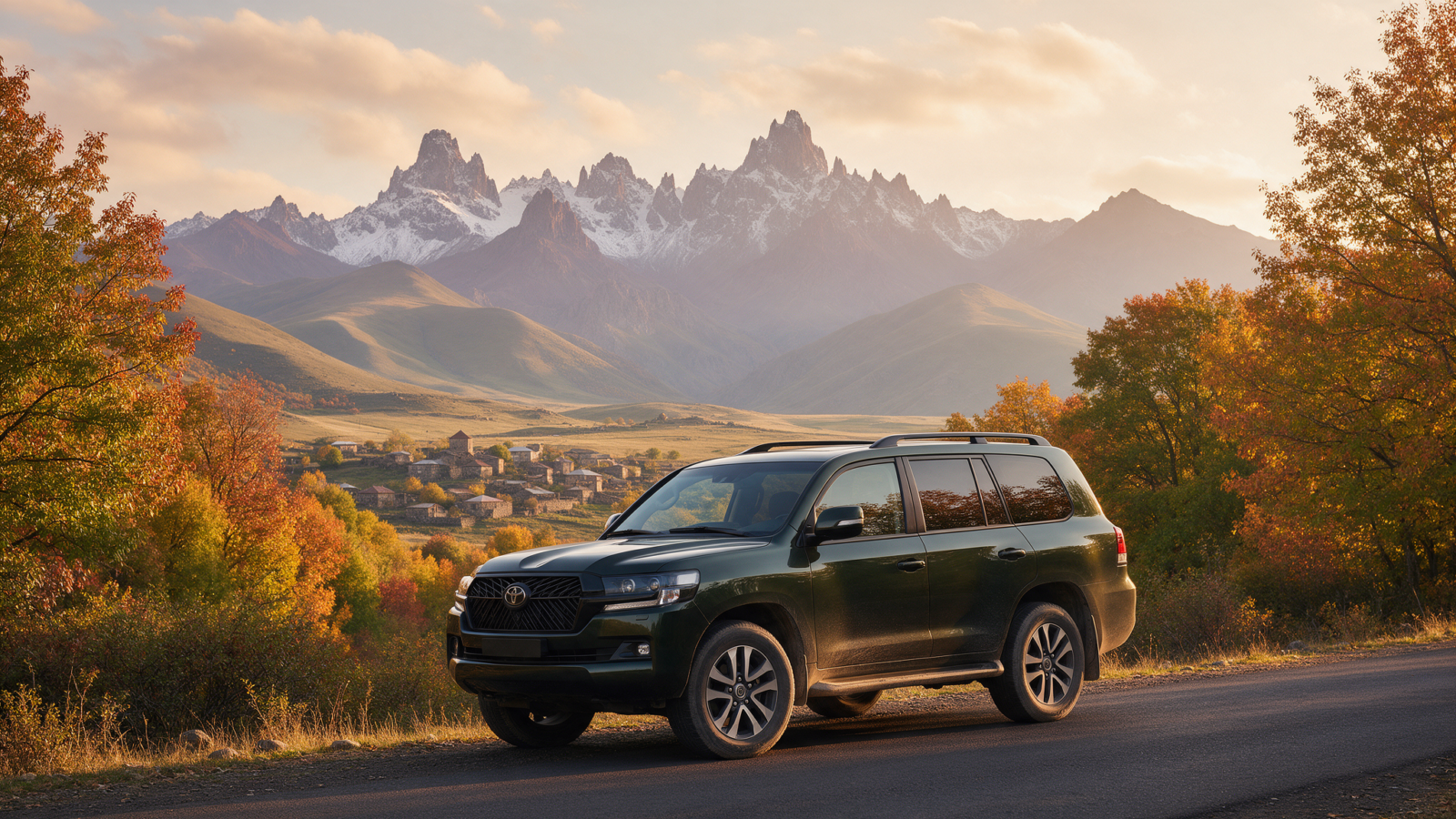
September is the single best month to drive in Armenia — the weather is settled, every mountain pass is open, and it’s also the busiest month of the year, which tells you something useful: demand in Armenia’s rental market swings roughly 2.8 times between the quietest and busiest months, but the price you pay barely moves. That means the real decision isn’t really about cost. It’s about which passes are open, how hot the plain gets, and how much company you want on the road.
The short answer
- Best all-round weather and accessSeptember
- Quietest roads, same priceFebruary
- Avoid on the Ararat plainLate July–August, 35–38°C
- Aragats/Kari Lake roadOpen mid-May to late November only
- Winter tyres legally required15 November – 31 March
Armenia, month by month
| Month | Weather | Passes | Crowd level | What’s on |
|---|---|---|---|---|
| January | Cold, snow likely, short days | Aragats/Kari Lake closed. Selim restricted for trucks, difficult for others | Quiet (demand index 34) | — |
| February | Coldest month; roads at their worst | Aragats/Kari Lake closed. Selim restricted | Quietest month (29 — roughly a third of September’s) | — |
| March | Winter easing, still cold at altitude | Aragats/Kari Lake still closed. Winter tyre law ends 31 Mar | Still quiet (36) | — |
| April | Spring on the plain | Aragats/Kari Lake closed until mid-May. Selim normally passable | Picking up (41) | Apricot blossom on the Ararat plain, mid-April |
| May | Warm, one of the best months on the plain (18–26°C) | Aragats/Kari Lake road reopens mid-May. Selim open | Rising fast (49) | Dilijan and Lori forests at their spring best |
| June | Turning hot; alpine meadows begin flowering | All open | 62 | Yerevan Wine Days (5–7 June 2026) |
| July | Hot on the plain (up to 35–38°C); alpine meadows peak | All open | 75 | Vardavar, moveable (12 July 2026); Golden Apricot Film Festival (12–19 July) |
| August | Hottest month on the plain | All open | Near peak (77) | Blessing of the Grapes (16 Aug) |
| September | Cooling, arguably the best all-round month (18–26°C) | All open | Highest of the year (81) | Independence Day (21 Sept) |
| October | Cooling further; Dilijan/Lori autumn colour peaks mid-to-late month | All open; Aragats/Kari Lake road open until late month | 63, dropping from peak but still strong | Areni Wine Festival (3 Oct); HIGH FEST (1–8 Oct); Yell Sport Fest, Yenokavan (22–24 Oct) |
| November | Turning cold | Aragats/Kari Lake closes late Nov. Winter tyre law starts 15 Nov | 44, falling | — |
| December | Cold, short days | Aragats/Kari Lake closed. Selim restricted, can close in storms | Quietest end of year (30) | Khor Virap in snow with Ararat behind it — Armenia’s signature winter image |
The demand figures are a published index from the local rental market, not a price — they show relative booking volume, month to month, on a common scale. Event dates are given as their 2026 instance; some, like Vardavar, are moveable feasts that shift year to year, so treat the month rather than the exact date as the reliable part of the picture.
The two closures that actually matter
Cut through the month-by-month detail and there are really two hard rules and one soft one.
Winter tyres are legally required from 15 November to 31 March, for every car and van up to 3.5 tonnes, with tread above 4 mm. This is a legal requirement, not a recommendation, and driving without compliant tyres in that window is a breach of traffic law that can void rental insurance cover. Full detail in winter driving in Armenia.
The road to Aragats and Kari Lake is fully closed from late November to mid-May — not restricted, not weather-dependent, closed. That’s roughly half the year. Outside that window it’s a genuine day trip; we cover the full route, Amberd fortress, and the shoulder-season timing in Mount Aragats and Kari Lake: when the road opens.
The Selim Pass is the soft case — usually restricted for articulated trucks and flagged difficult for other vehicles rather than fully closed, though it does shut outright in severe weather. It’s a different kind of closure from Aragats: day-to-day rather than seasonal, and worth checking the morning you travel rather than assuming either way. We go into the pass itself, and the 14th-century caravanserai at its summit, in the Selim Pass and the Vardenyats caravanserai.
Demand and price don’t move together
This is the part most planning advice gets wrong by omission. Booking demand swings by roughly 2.8 times between February, the quietest month, and September, the busiest — February runs at roughly a third of September’s volume. But average daily rental rates barely move across that same range, staying in a narrow band regardless of season. The Armenian rental market, in other words, under-prices its own peak season.
What actually moves the price more than the month is the length of the booking: a 3-day rental costs 25 to 30 per cent more per day than a 7-day one. If you’re choosing when to come purely on cost, the answer is to book longer, not to avoid summer. If you’re choosing on crowds, heat and how busy the popular sites feel, the calendar above is what matters, and the shoulder months — May, early June, late September, October — give you nearly September’s access with noticeably fewer people on the road.
Weather, region by region
Armenia’s regions don’t all peak at the same time, which is worth knowing if your itinerary covers more than one.
The Ararat plain and Yerevan are best in May–June and September–October, running 18–26°C; July and August climb to 35–38°C and are worth avoiding for anything that isn’t shaded or air-conditioned. Lake Sevan is a June–August destination for swimming, water running 18–22°C — it’s also where a lot of Yerevan goes to escape the heat, so expect company on the shore in peak summer. Dilijan and the Lori region are at their best for spring forest in May and for autumn colour in October, peaking mid-to-late in the month — that includes the Debed canyon monasteries further north in Lori. Syunik and Tatev favour May and October over the summer extremes. Aragats itself, as covered above, has its steadiest window in July through September even though the access road opens earlier.
Extending into Georgia
If your trip continues over the border, timing matters there too. The Bagratashen crossing on the main route north runs 24/7 year-round and doesn’t need special seasonal planning. The Bavra crossing, further west across the open Javakheti plateau at around 2,000 metres, is a different story — snow and ice are common there from late autumn through early spring, and it’s not a sensible winter option for a Yerevan–Tbilisi run. Our guide to driving a rental car from Armenia to Georgia covers both crossings, the paperwork, and how the seasons affect each one.
Not sure which window fits your trip?
Tell us your dates and what you want to see, and we’ll tell you plainly which passes will be open, how hot it’ll be, and whether you’re travelling in the busy weeks or the quiet ones.
Questions people actually ask
What’s the best month to rent a car and drive in Armenia?
September, on balance — settled weather, every pass open, and the cooling end of summer heat. It’s also the busiest month, so if you’d rather have quieter roads for a similar experience, May, June or October are close behind with far fewer other travellers.
When is renting cheapest in Armenia?
Prices barely change across the year despite demand swinging almost three-fold between February and September. Booking a longer rental affects the daily rate far more than the month does — a 3-day rental costs 25–30% more per day than a 7-day one.
Is it too hot to drive in Armenia in July and August?
On the Ararat plain and in Yerevan, yes — expect 35–38°C. Higher ground is a different story: Aragats is in its steadiest window through this period, and Lake Sevan is exactly where people go to escape the heat.
When does the road to Kari Lake open?
Mid-May, and it closes again in late November. Outside that window the road is fully shut, not just difficult. Full detail in Mount Aragats and Kari Lake.
Is the Selim Pass open in winter?
Usually restricted rather than fully closed — typically flagged as closed to articulated trucks and difficult for other vehicles, with full closures only in severe weather. See the Selim Pass and the Vardenyats caravanserai and winter driving in Armenia for the details.
When do I need winter tyres in Armenia?
From 15 November to 31 March, by law, for all cars and goods vehicles up to 3.5 tonnes, with tread above 4 mm. See winter driving in Armenia for the full rule.
What’s the best month for autumn colour?
October, peaking mid-to-late in the month, especially in Dilijan and the Lori region — including the Debed canyon monasteries. It’s also when the Areni Wine Festival and HIGH FEST run, so early October combines well if you want both the colour and the events.
Last verified 25 September 2026. Seasonal closures and winter-tyre dates come from Armenian Rescue Service and Ministry of Internal Affairs sources. Demand figures are a published rental-market index, not a price. Event dates are the 2026 instance and, where an event is moveable, are given as an example rather than a fixed annual date.